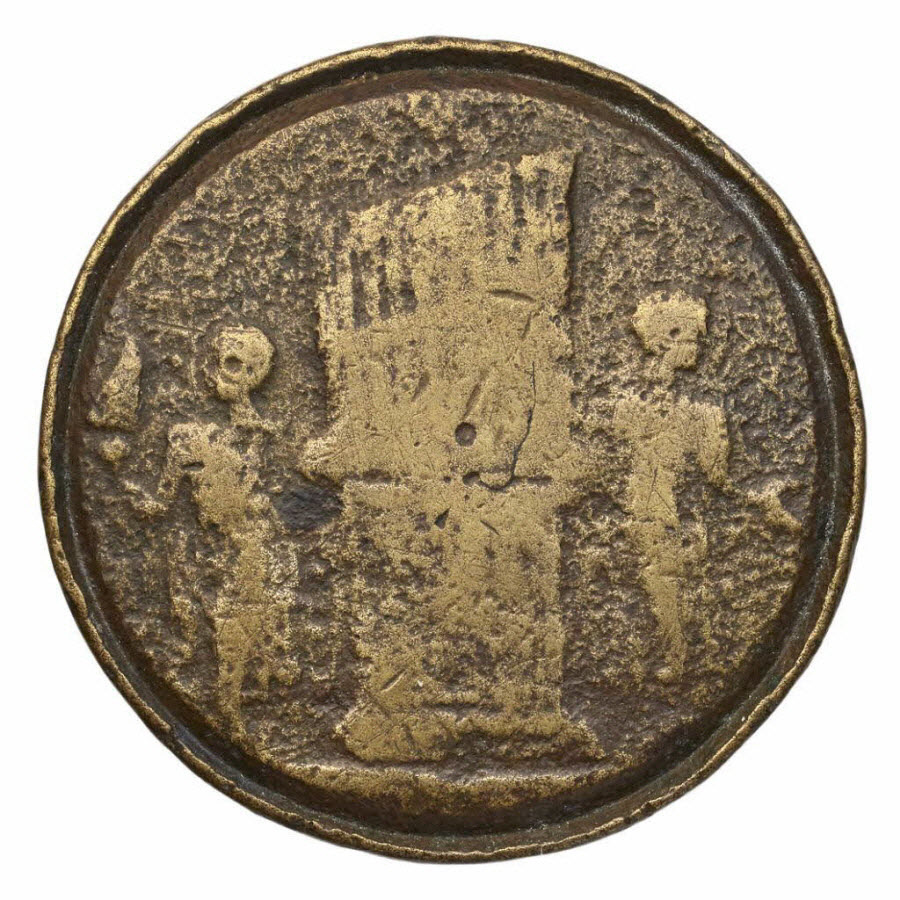
These are medallions depicting on the recto the effigy of an emperor (Caracalla or Trajan) or an incised monogram, with a subsequently added incised palm in one specimen. On the reverse, all the medallions show a hydraulic organ with variable but similar characteristics.
First medallion: The organist is seated before the cistern, which appears as wide as it is tall and partly concealed. On the sides two cylindrical pumps with operating levers can be seen. The sounding section has 11 pipes held by a horizontal bar between two lateral uprights. The treble pipes are to the right of the organist; the keyboard is concealed. On either side of the instrument triangular superimposed objects appear, probably symbols of victory.
Second medallion: The cistern, taller than wide and unadorned, rests on a plinth. The wind chest supports 9/10 pipes without bars or uprights; above it a semicircular object with spokes can be seen, masking the foot of the central pipes, its function uncertain. The treble pipes are to the right of the organist, while two female figures are depicted on either side of the organ, one of whom holds the triangular object.
Other six medallions: Similar variants, with figures standing on either side of the instrument; the form of the organ varies slightly, but none possesses the mysterious half-wheel of the second medallion. All probably date from the same period or issue. In all cases, the ensemble documents the structure and role of the late antique hydraulis, with the organist depicted intent on playing and with symbols of victory or celebration on the sides.