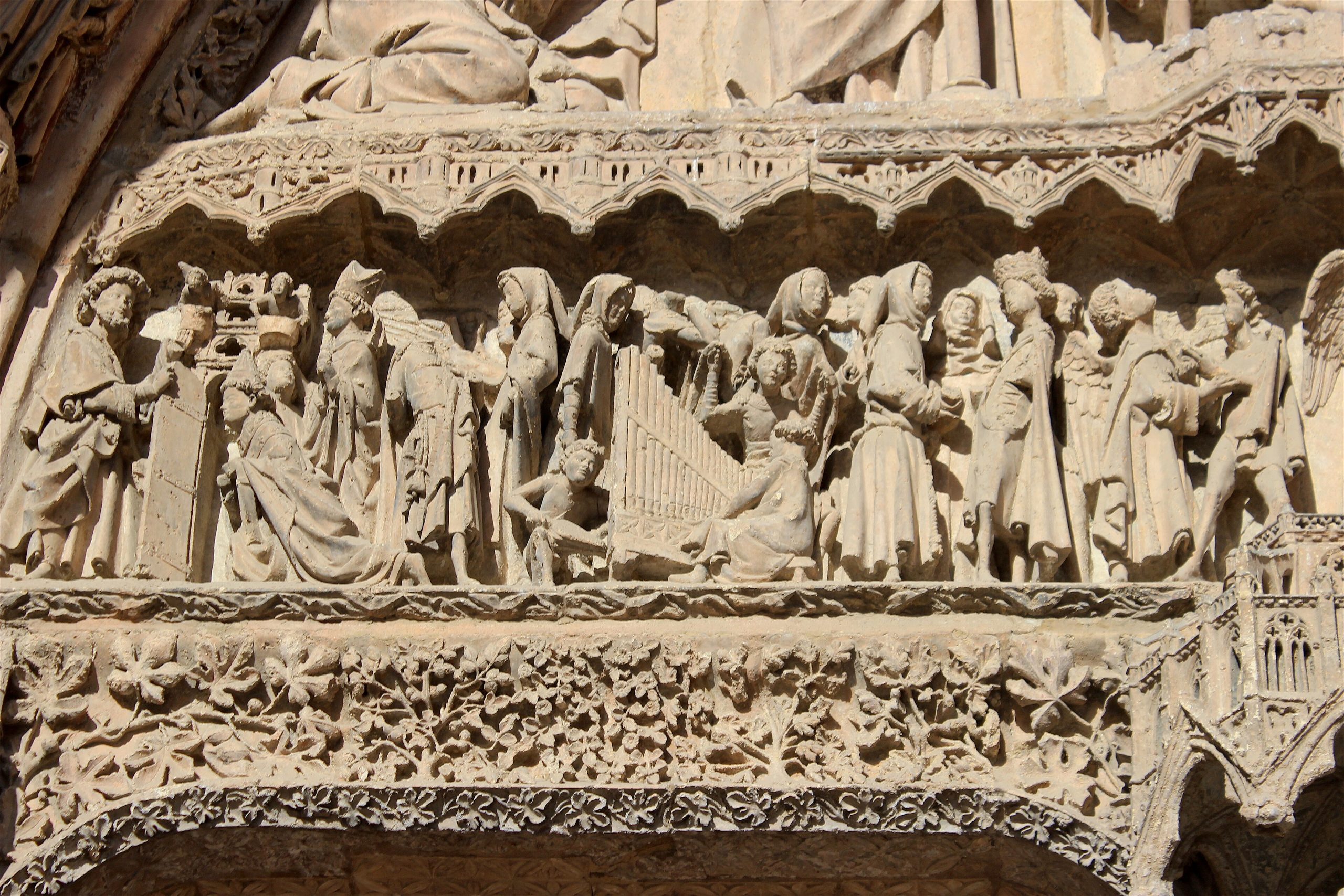
Organarium is a digital archive that collects and organizes historical evidence of the ancient and medieval organ: a repertoire of iconographic sources and treatises, which can be explored through interactive pathways, a geographical map, and a chronological timeline.
The goal is to present, within a single environment, the evolution of the instrument from the earliest representations of the Greco-Roman hydraulis to the late medieval organ, creating a dialogue between what the images show and what the technical and theoretical texts describe.
The Principle: Gathering the Earliest Sources
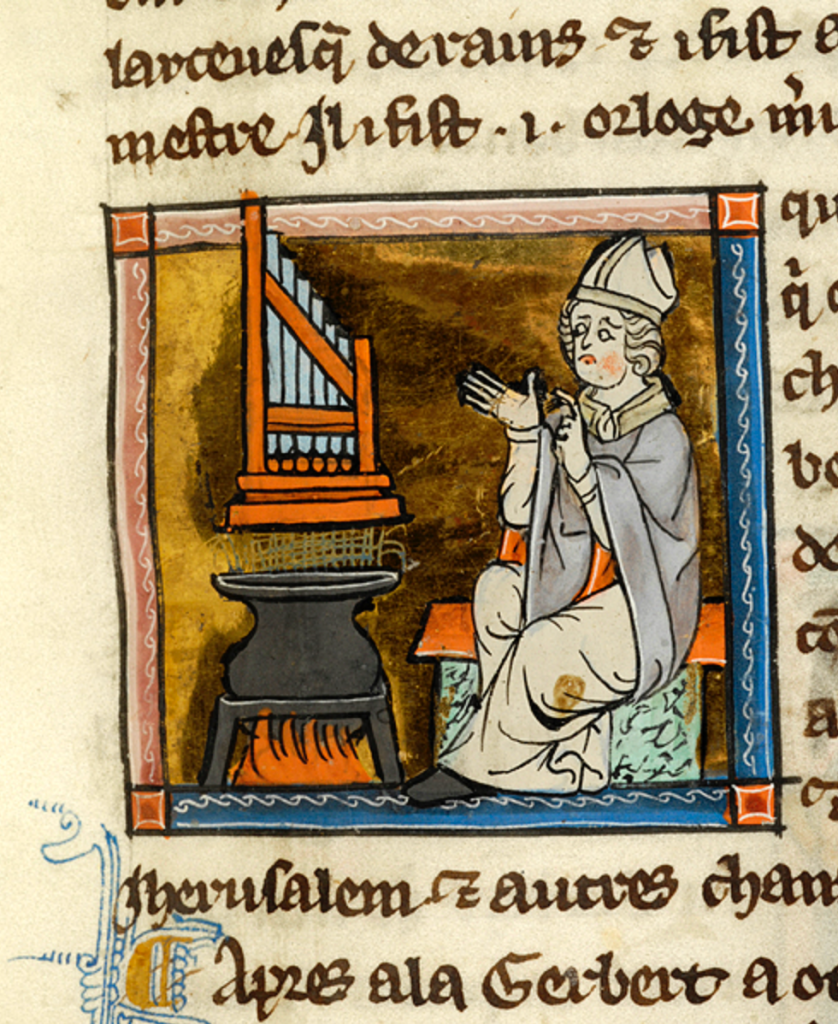
Organarium does not aim to be an essay on the organ, but rather the place where the earliest sources—the oldest visual and textual evidence of the instrument—are gathered, verified, and made accessible in a single environment. Collecting and organizing primary material means creating the necessary conditions for research to take place: it is up to scholars, starting from these sources, to infer connections, hypotheses, and reconstructions. Organarium provides the documentary foundation; the interpretation remains open.
Origin Within JERUS-IT-ARTS
Organarium was created as part of JERUS-IT-ARTS, a project that reconstructs the artistic dialogue between Italy and Jerusalem from the Middle Ages to the present day, combining historical research and digital practices (CUP project no. E33C24000160006).
The repertoire builds upon the work of the Academy of Fine Arts of Milan (Accademia di Belle Arti di Milano) on the digital enhancement of the project’s musical heritage and the study of the historical organ rediscovered in Bethlehem. From this core, an independent consultation tool took shape, dedicated to collecting the earliest sources on the history of the organ.
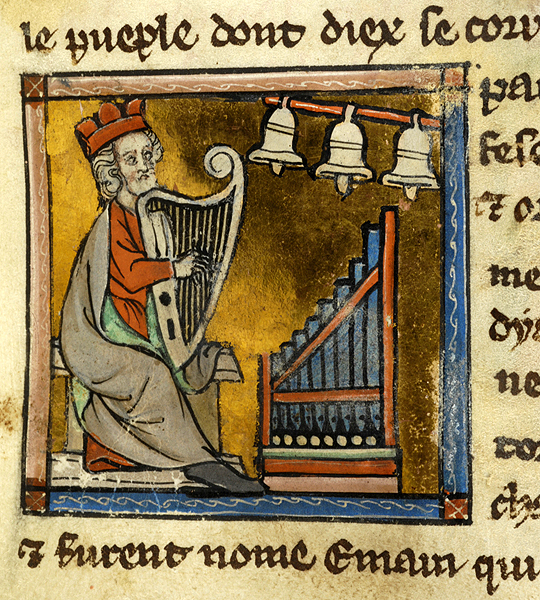
Objectives
Gather the earliest visual and textual sources on the ancient and medieval organ in an open and accessible format.
Contextualize each source in space (map) and time (timeline), tracing its technical, sonic, and symbolic evolution.
Ensure the long-term preservation and accessibility of the collected material, in a format designed to endure and remain usable over time.
Visualizing the Sources: The Map and the Timeline
Gathering the earliest sources is not enough: it must be possible to read them together. For this reason, Organarium does not merely list the evidence but makes it visible as data. Each entry carries its own coordinates—a place and an era—thus becoming a point on a map and a node on a timeline.
The geographical map transforms the repertoire into a territory: it shows where the organ was depicted or described, brings to light regional concentrations and schools, and highlights how the instrument traveled and took root in different contexts.
The chronological timeline flattens geography and stretches everything along the axis of time: it allows users to see at a glance the succession of forms—from the hydraulis to medieval positive and portative organs—and to grasp the accelerations, persistences, and leaps that a simple list could never reveal.
This is what distinguishes a static archive from a living repertoire: the same sources, when approached from different perspectives, generate new questions every time. Visualization does not add content—it makes it queryable. And it is precisely from this querying that research begins.
Promoted, as part of JERUS-IT-ARTS, by:

Project partners