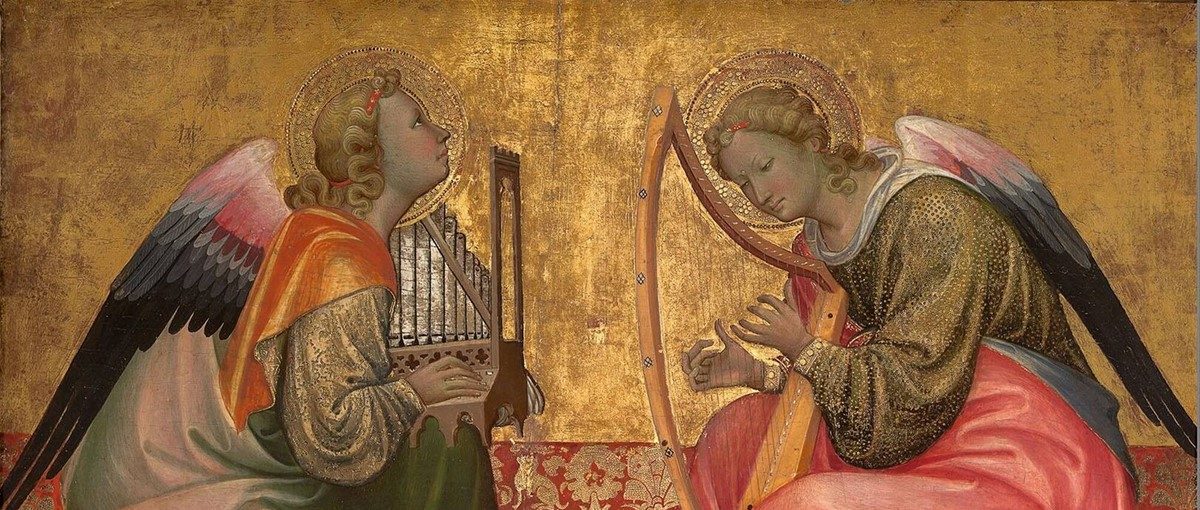
Organarium collects the earliest sources of the ancient and medieval organ and presents them with the least possible mediation. It does not propose a thesis on the organ and avoids adding interpretative layers to the sources: it reports each piece of evidence along with its verified data—era, location, provenance, holding institution, conditions of use—and leaves inference, connections, and hypotheses to the scholars who consult it. Where a source does not allow for certainty, the uncertainty is stated rather than resolved.
The repertoire is organized into two collections and two cross-sectional access keys.
In parallel, work was carried out on data visualization, developing viewing filters that enable the analysis of data subsets, both through an overview and within the timelines and geographical views, in order to make the geographical distribution of the sources visible.
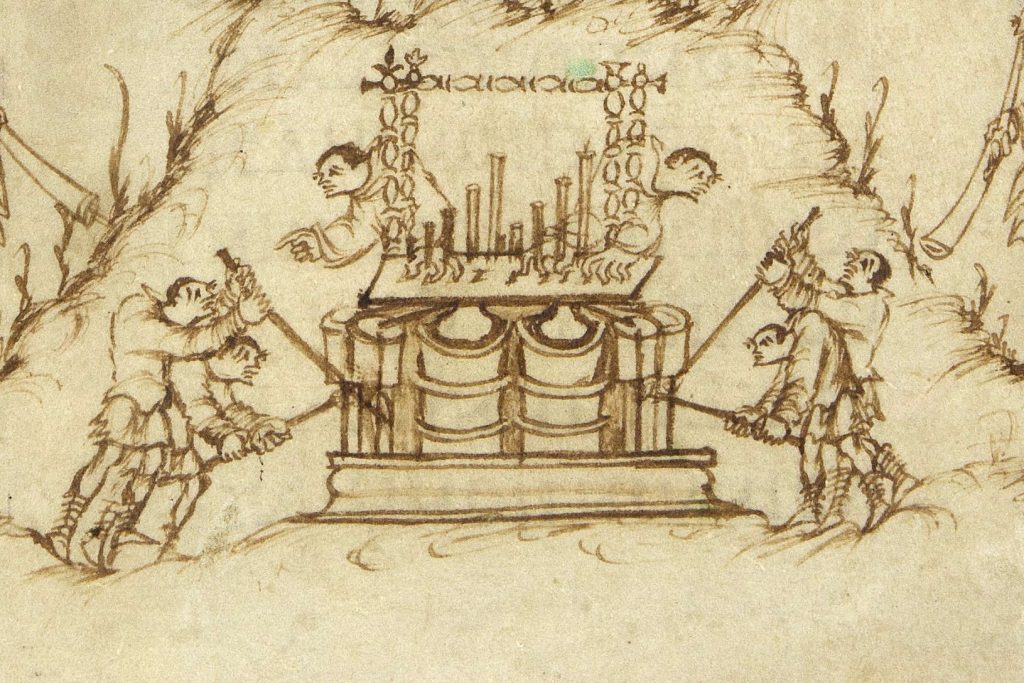
Iconography
The collection of iconographic sources tracks the organ from its earliest material evidence up to the threshold of the modern era: from the terracottas and mosaics attesting to the Greco-Roman hydraulis, to Late Antique sarcophagi, lamps, vases, and contorniates, down to the long era of medieval miniatures—psalters, books of hours, scenes of David the musician, angel organists—as well as sculptural and pictorial evidence up to the 16th century. Each entry records the dating, location, source, and credits, and can be filtered by work category, material, and technique.
Books
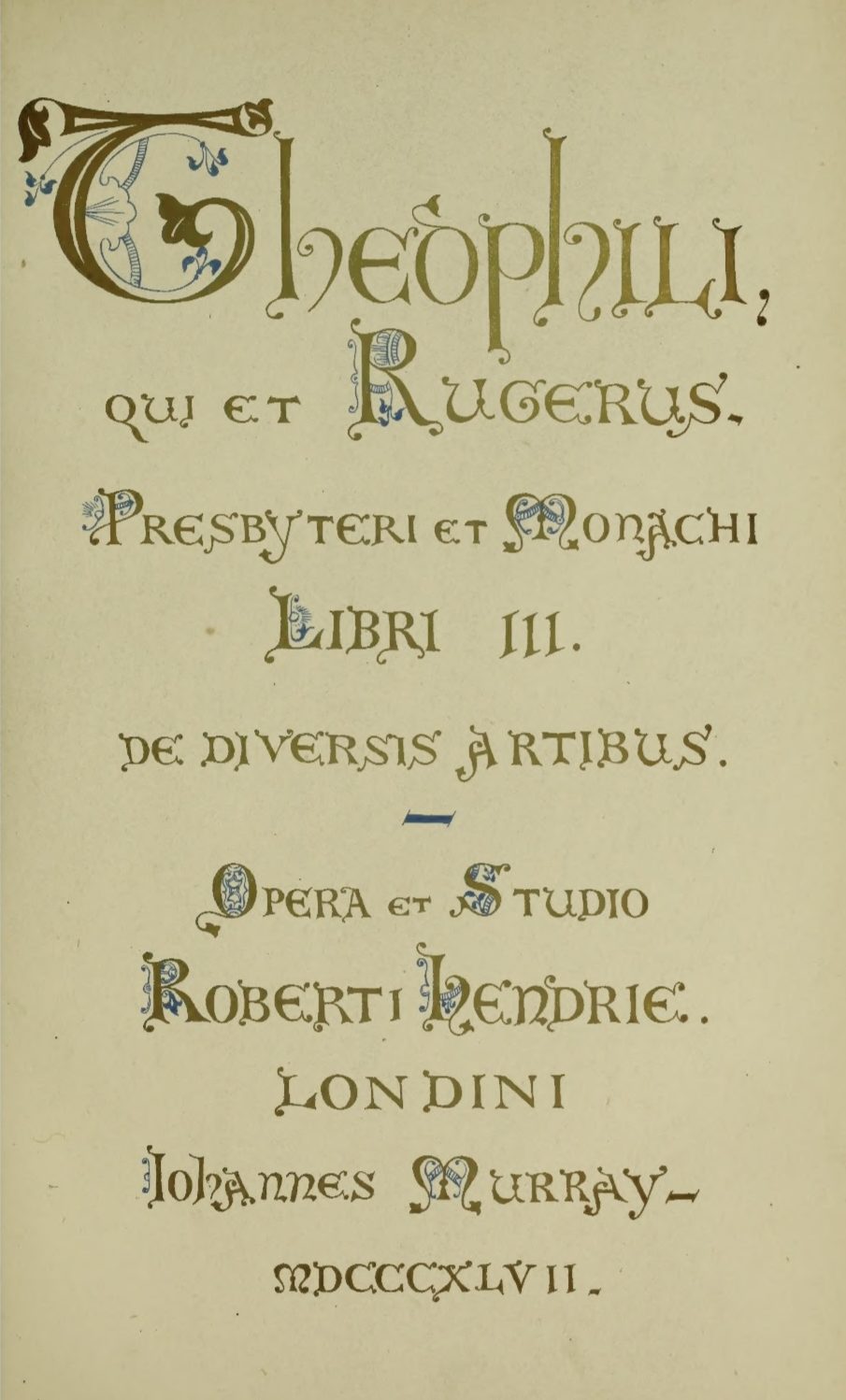
The collection of textual sources documents the technical and theoretical thought behind the instrument: from Vitruvius’s description of Ctesibius’s hydraulic organ and Hero of Alexandria’s Pneumatica, through Late Antique references, to medieval treatises on pipe measurement and organ building—from Gerlandus and the De Mensura Fistularum to Theophilus, Aribo, John Cotton, and Engelbert of Admont. Each source is introduced by an essential summary of its content.
How the Research Was Conducted
The repertoire is the result of a structured workflow, not a mere compilation. The phases that produced it are:
1
Bibliographical Foundation. A scientific reference bibliography on the ancient and medieval organ was collected and selected (including works by Perrot, Williams, Apel, Bittermann, Caldwell, Bowles, Marshall, Montagu, Catalunya, among others), forming the documentary bedrock of the project.
2
Identification of Earliest Sources. The oldest evidence of the instrument was extracted from the literature, distinguishing primary sources—both iconographic and textual—from the studies written about them.
3
Controlled Cataloging. Each source was cataloged in a fixed-field database: dating, location, holding institution, source, image conditions of use, and caption, with the processing stage tracked up to the final version.
4
Verification of Rights and Provenance. The license (Creative Commons, public domain) and provenance were verified for each piece of evidence, requesting authorizations from institutions whenever necessary. In the absence of a usable reproduction, this condition is declared and managed through solutions explicitly stated as such.
5
Quality Control and Review. The contents undergo a formal verification process: errors—regarding dating, location, provenance, and units of measurement—are classified by severity and corrected by comparison with the primary source and specialist literature.
6
Publication and Consultation. The verified material flows into the public repertoire and its access keys (the map and timeline), which are designed to endure and remain accessible over time.